KitchenAid vs Cuisinart: Best Mixer for Home Bakers
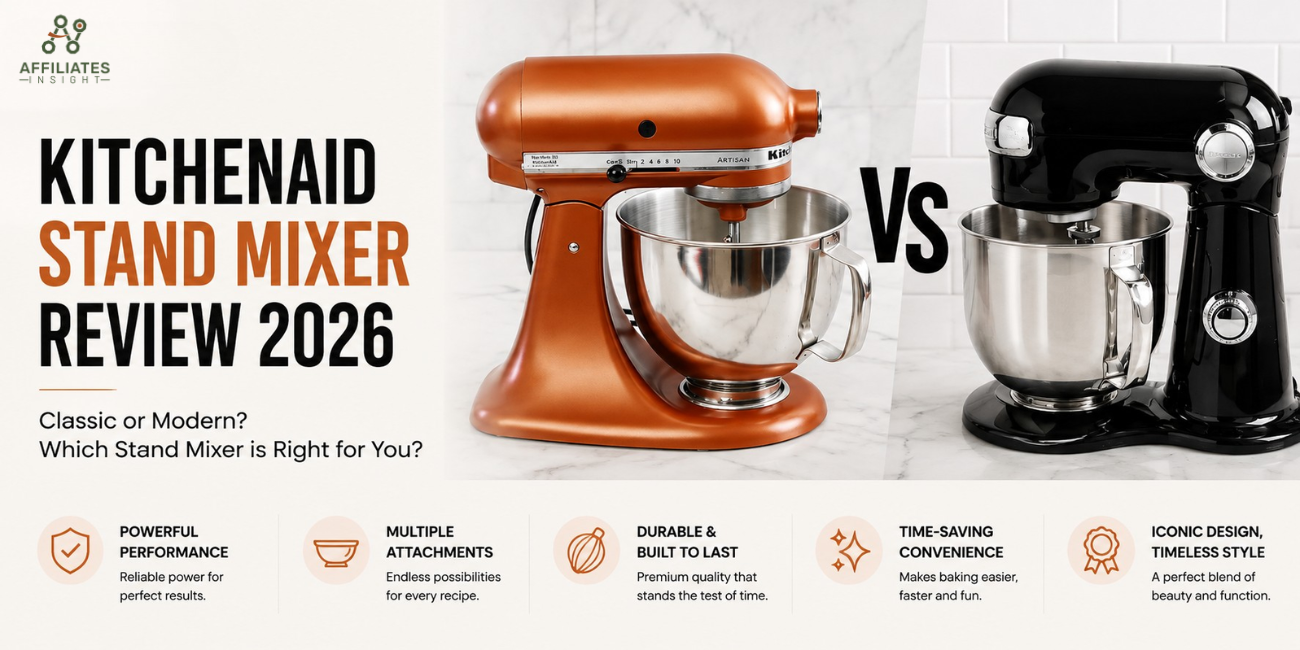
Choosing a stand mixer is one of those kitchen decisions you don’t make often, but it can shape your entire baking experience. KitchenAid and Cuisinart are two of the most popular names in this space, and while both handle everyday baking well, they’re built with very different priorities. One leans toward premium durability and versatility, while the other focuses on stronger motor performance and better affordability. Understanding that difference is key before you buy.
1. Quick Overview
KitchenAid is widely seen as a long-term kitchen investment. It’s known for its solid build, iconic design, and large ecosystem of attachments that turn it into more than just a mixer. Cuisinart, on the other hand, is more practical and budget-friendly. It often delivers strong motor performance in certain models and is aimed at home bakers who want functionality without paying a premium price. In simple terms, KitchenAid is built for longevity and versatility, while Cuisinart focuses on accessible performance.
2. Design & Build Quality
KitchenAid stands out immediately with its heavy, metal construction and stable base. It feels durable and secure even when mixing thick dough. Many users keep their KitchenAid mixers for years without major issues, which reflects its long-term build philosophy. Cuisinart mixers are lighter and easier to move around. This makes them more convenient for smaller kitchens, but they don’t feel as solid or industrial compared to KitchenAid.
👉 KitchenAid feels like a premium, permanent appliance. Cuisinart feels more lightweight and practical for everyday use.
3. Performance & Mixing Power
Both brands handle common baking tasks like cake batter, whipped cream, and cookie dough with ease. However, their strengths differ slightly. KitchenAid is known for smooth, controlled mixing, especially in small to medium batches. It prioritizes consistency and stability over raw power. Cuisinart often uses a stronger motor in similar-sized models, which can give it an advantage when working with heavier doughs like bread.
👉 In real use, Cuisinart may feel stronger with dense mixtures, while KitchenAid feels more refined and stable for general baking.
4. Bowl Size & Capacity
Both brands typically offer similar bowl sizes around 5 quarts, which is suitable for most home bakers. KitchenAid, however, provides a wider range of size options across its lineup, making it easier to scale up if your baking needs grow over time. Cuisinart keeps things simpler with fewer variations.
5. Attachments & Versatility
KitchenAid clearly leads in versatility. Its attachment system is one of the biggest in the industry, allowing you to add pasta makers, grinders, ice cream attachments, and more. This transforms it from a mixer into a multi-purpose kitchen tool. Cuisinart does offer some attachments, but the ecosystem is much smaller and less expandable.
👉 If you want a single appliance that can do more than just mixing, KitchenAid has a clear advantage.
6. Ease of Use
Both mixers are beginner-friendly with simple speed controls and easy setup. Cuisinart has a slight edge in portability due to its lighter design, making it easier to move or store. KitchenAid, while heavier, feels more stable during high-speed or heavy mixing, which some users prefer for consistency.
7. Durability Over Time
KitchenAid has a strong reputation for long-term reliability. Many users report using the same machine for years without noticeable decline in performance. Cuisinart is still durable for regular home use, but it is generally positioned as a more budget-conscious option rather than a lifetime appliance.
👉 KitchenAid is built for longevity, while Cuisinart is designed for practical everyday use.
8. Pros and Cons
| KitchenAid – Pros | KitchenAid – Cons |
| Exceptional durability and long-lasting build quality | More expensive than many competitors |
| Extensive attachment ecosystem for added versatility | Heavier and less portable |
| Stable, consistent mixing performance | Entry-level models may offer less motor power than some rivals |
| Holds its resale value well over time | Higher upfront investment |
| Cuisinart – Pros | Cuisinart – Cons |
| More affordable with excellent value for money | Build quality feels less premium than KitchenAid |
| Strong motor performance for its price | Limited attachment and accessory options |
| Lighter and easier to move or store | Less established accessory ecosystem |
| Well-suited for casual and home bakers | May not offer the same long-term durability as KitchenAid |
9. Which One Should You Choose?
KitchenAid is best suited for people who bake regularly, want long-term reliability, and are interested in expanding their kitchen capabilities with attachments. It’s ideal for serious home bakers who view their mixer as a long-term investment. Cuisinart works better for occasional bakers or anyone who wants solid performance at a lower price point without needing extra accessories or premium build materials.
10. Final Verdict
Both KitchenAid and Cuisinart are capable stand mixers, but they serve different types of users. KitchenAid focuses on durability, versatility, and long-term value, while Cuisinart offers strong performance at a more accessible price. Your choice ultimately depends on how often you bake and how much you value long-term investment versus upfront savings.
11. FAQs
Is KitchenAid better than Cuisinart?
KitchenAid is better for durability and versatility, while Cuisinart offers better value for money.
Can Cuisinart mixers handle bread dough?
Yes. Most Cuisinart mixers can handle bread dough with ease.
Which mixer is better for everyday baking?
KitchenAid is generally the better choice for regular baking.
Is KitchenAid worth the higher price?
Yes, if you bake frequently and want long-term reliability.
Is Cuisinart good for beginners?
Yes. Its lower price and ease of use make it beginner-friendly.
Which stand mixer lasts longer?
KitchenAid mixers typically last longer with proper care.